
Come Visit, But Read This First
The summer invasion has begun. Here's your field guide.

We’ve had 45 people come to visit us in the last 18 months. That equates to 23 separate visits. I know because I keep track with a little form I made for myself — who came, when, and the highlights. Where did we eat? What did we do? Which châteaux did we visit?
When we first moved to France, we were afraid we’d be lonely, being so far from family and friends. Clearly, our fears were unfounded. I should have known this from reading Peter Mayle’s A Year in Provence. But after a delightful onslaught of visits, you start to think about optimization. Streamlining. Yes, those are very American words to apply to a visit to France — perfectly predictable from a business school graduate, and I own it completely.
We figured out a few things that first year: a shared calendar, a list of the best nearby restaurants, a running doc of fun things to do with kids. And then I thought — what if I turned all of this into something useful beyond our own front door? A guide that answers the questions we hear most, written in a way that works whether you’re staying with us or someone else entirely.
Not everyone will agree with every point. Somehow this guide has managed to be both long, and yet not quite complete. I know that, and I’ve agonized over it! But if it saves you some sanity — and maybe spares you a cheese-related incident at the fromagerie — then my work here has been worth the effort.
This guide covers:
Before You Book
Things to Consider as You Pack
You’ve Landed. Now What?
The Art of Being a Guest
Set Your Expectations
The Basics of Being in France
Getting Around
Money Matters
Health and Emergencies
Things People Ask About (or Occasionally Complain About)
Shall we dive in?
Before You Book
This should go without saying, but before you hit confirm on that flight, have a conversation with your host. It will save everyone — including you — a lot of energy later.
A few things worth sorting out upfront:
Where should I fly into? Your host will know what makes the most sense. In our case, Bordeaux is the obvious answer — we’re about an hour from the airport. Paris first isn’t a bad idea either, especially if it’s your first time in France. A few days in the capital before taking the TGV south is a lovely way to ease in.
Are my dates flexible? Ask. Your host may have other guests coming, work commitments, or a wedding in the village that week. A quick check before you book avoids the awkward “oh, that’s actually a tricky week for us” conversation after you’ve already paid for your flights.
How do I want to get around? Think about this honestly, especially if your host isn’t in a city with easy public transport. Being ferried around is one kind of trip, but you may feel limited. Renting a car opens everything up. And a practical note: French cars are much smaller than American ones, and anything resembling a minivan is a rare sighting. If there are three or more people in your party, you’ll likely need your own car regardless.
How mobile are you? This will shape the arc of the trip – where you go, what you see, how you get there. Because unfortunately, a lot of these old towns are not as accessible as your hometown. Thankfully, there are always ways to adapt — we’ve rented mobility devices, ordered shower stools, and accumulated what can only be described as a veritable arsenal of equipment.
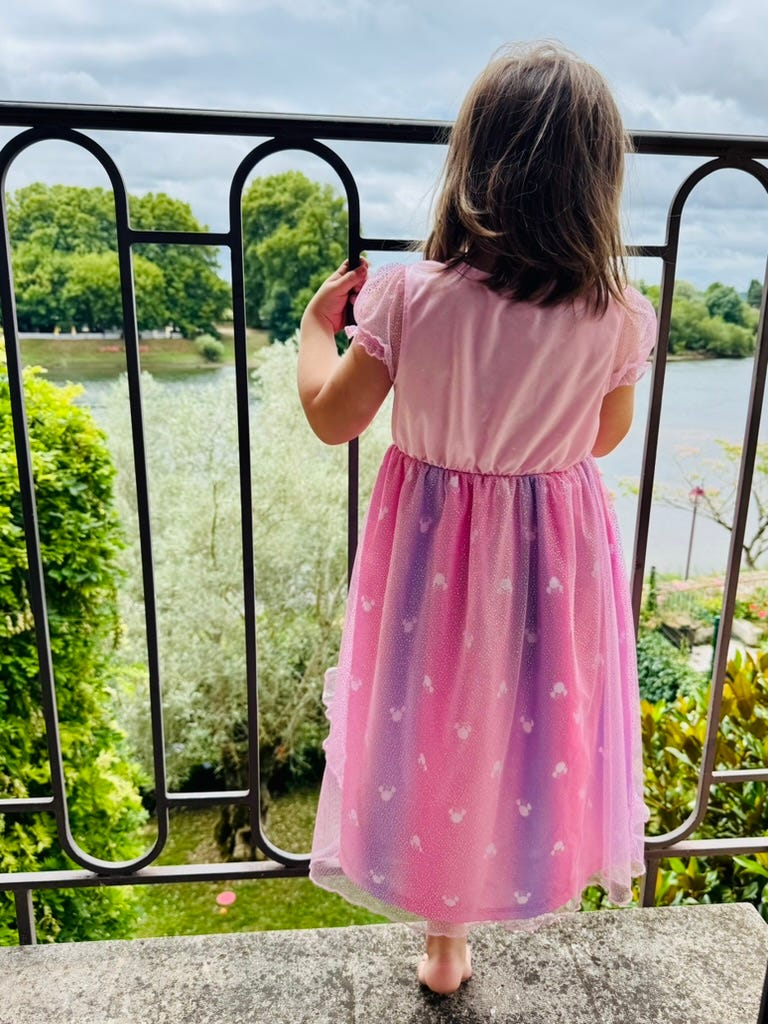
Who are you coming with? If you’re bringing small children, a word of caution. We discovered our house was not exactly baby-proofed when our four grandchildren arrived, and our youngest granddaughter was obsessed with balconies and open windows. Turns out she was “hunting for mermaids” in the river below. Needless to say, she kept us on our toes that week! These are old houses — beautiful, characterful, and not designed with American childproofing standards in mind. It’s probably a good idea to do a walk-through together to anticipate some of the ways these young visitors might get themselves into trouble.
This is also the moment to have an honest conversation with yourself about what kind of guest you are. We love all of our guests, without a doubt. But there’s a spectrum. On one end, what we call our “white glove” guests — elderly parents, close family, people who need a little more looking after, and for whom we are delighted to provide it. On the other end, there’s the independent guest, who rents a car, has ideas about what they want to do, and occasionally disappears for the day to explore on their own. That guest, given the scale of the summer invasion, is a particular kind of gift. Even if you’re not 100% confident, stretch into the challenge — it’s a great way to build your travel muscles.
Most people fall somewhere in the middle, and that’s fine. The key is knowing where you land — and communicating it. Your host isn’t a mind reader, and “we’re up for anything!” while charming, only works if you actually mean it.
Things to Consider as You Pack
A little preparation goes a long way. Here’s what we’ve learned after 45 visitors:
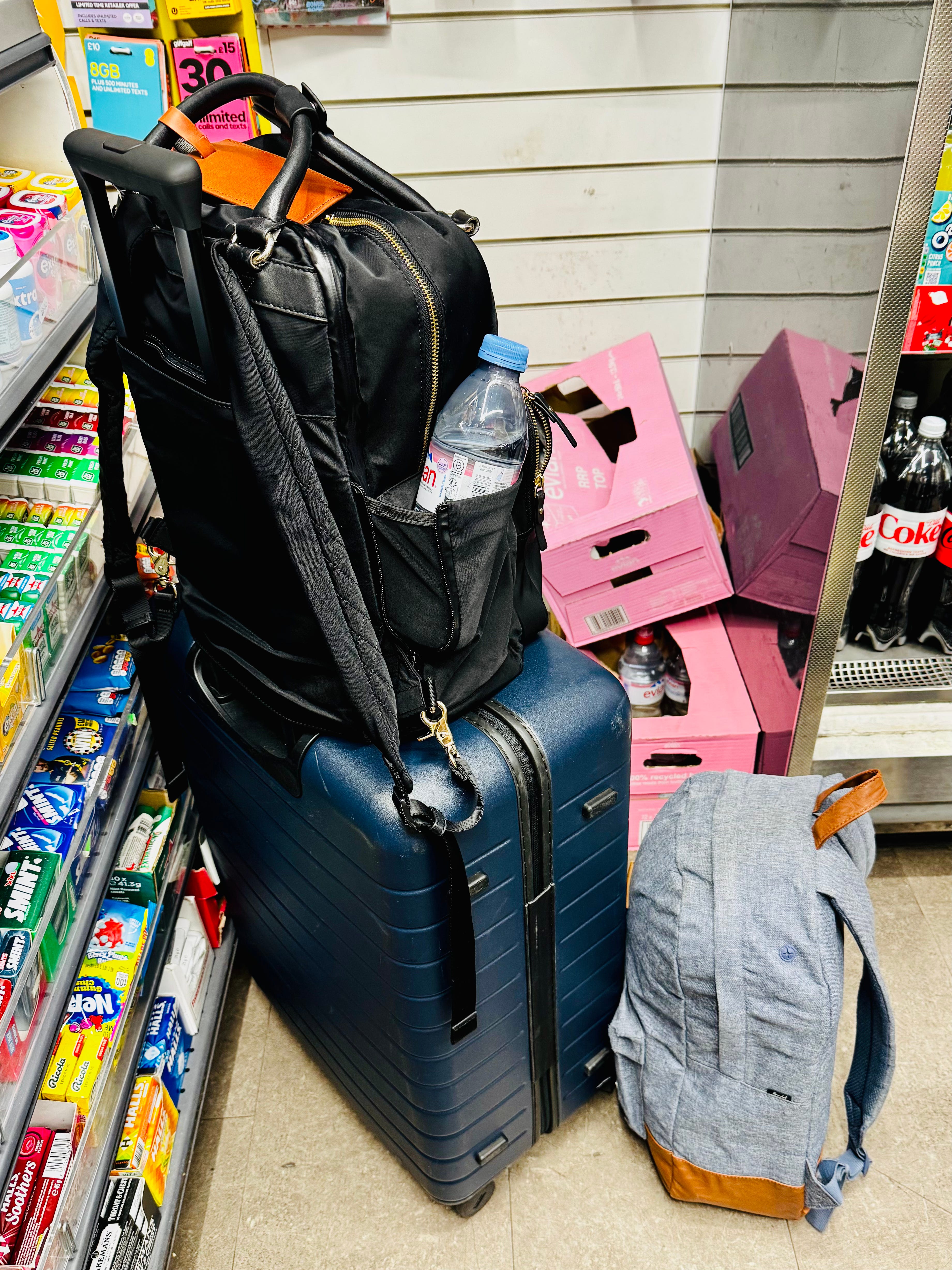
First, think about what you can reasonably manage yourself, luggage-wise. I’m not saying no one will help you, but if you’re taking the train or have multiple legs to your journey, you will thank yourself for not overdoing it. For instance, on a longer trip, I take one medium suitcase, a travel backpack for my laptop that slides over the handle, and a crossbody bag. I can wear the backpack while carrying my luggage up a flight of stairs if needed — and sometimes that is needed.
A word on shoes and stamina: you are going to walk more than you think. Parking is often difficult, things worth seeing are rarely drive-through, and cobblestones can be brutal. Work on your stamina before you come — even a few weeks of longer walks can make a real difference. And whatever shoes you’re planning to bring, ensure they’re genuinely broken in. Showing up with a new pair and expecting to walk five miles can end badly, especially for your feet.
You might be wondering what you can gift your host. It’s always appreciated if you ask whether there’s anything they’d like you to bring from home. A bottle of bourbon. A favorite spice blend. Ziplock bags in multiple sizes. That specific toothpaste that doesn’t exist in Europe. You get the idea! This is one of the nicest things a guest can do, and it costs almost nothing (I mean, unless we’re talking a bottle of Blanton’s)! As a host, you can absolutely decline, but most people would rather offer something you’ll genuinely enjoy.
What you don’t need:
High heels — cobblestones and ankles don’t play nicely together
Lots of workout gear, unless you’re actually planning to work out (one pair of yoga pants is fine — we know it’s basically a security blanket for American women)
110v appliances, especially hair tools — France runs on 220v, and we’ve watched more than one beloved flat iron meet its end on a French outlet. Leave them, buy a converter, or ask your host first
Possibly basic toiletries, like shampoo, body wash, and lotion — in fact, I like to have a nice selection of my favorite French essentials for my guests
What you absolutely should bring:
A universal charger with both USB and USB-C ports
A portable battery pack — don’t skip this
An eSIM or international data plan, sorted before you land
Any medications you’ll need for the duration in your carry-on luggage (never in checked bags), with a little extra just in case
Finally, two things that will make your return journey smoother. Pack a collapsible duffel bag inside your suitcase — dirty clothes go in it on the way home, souvenirs go safely in the main bag. And if you’re a wine drinker, bring protective wine bottle sleeves. You are hopefully going to buy wine here, because it’s some of the best in the world — so help the crise du vin and get those bottles home safely!
P.S. It’s practically impossible to ship anything back to the US now, so taking it back on the plane is pretty much your only option.
You’ve Landed. Now What?

Transatlantic travel is no joke. You will arrive tired, possibly disoriented, and almost certainly convinced that a nap is a good idea. I get it! But hear me out — this is important.
Stay awake. The single best thing you can do on arrival day is to stay awake until at least 10 pm. Unpack. Shower. Take a short nap if you must — no more than an hour. Get outside and move your body. Because if you go to bed at 6 pm, you will be wide awake at 3 am staring at the ceiling, and all your days after that will feel the domino effect. Push through. It’s France. There are worse places to fight jet lag.
Contact your host. Before you leave home, make sure you have an easy way to reach your host — WhatsApp works well for most international communication. A quick “just took off from Paris!” or “landed, grabbing my bags” goes a long way, whether or not they’re coming to pick you up. Your host is thinking about you, and a little update along the way — without being asked — is the kind of thing that makes you a great guest before you’ve even walked through the door. And send your flight number and details ahead of time. We use apps to track unexpected delays, arrival gates, etc.
Prepare for a fab first morning. One thing to discuss before you arrive: your morning routine, any dietary restrictions, and if you need something particular, like oat milk for your coffee. Answer specifically — it’s one of those small things that helps the first morning go smoothly. We always show our guests how to use the coffee machine and water kettle before they go to bed, plus where the cream and sugar are stored. This is especially useful if you wake up early and want a cup to start your day before your host arises. And speaking of mornings: breakfast is not really a thing here the way it is in the US. Don’t expect a spread most days, at least from us. But croissants and chocolatines are always a welcome treat!
The Art of Being a Great Guest

Here’s something easy to gloss over when visiting friends living abroad: you’re not just going on vacation. You’re stepping into someone’s actual life. And that’s not a warning — it’s the best part.
Our commitments here don’t stop when guests arrive. There’s visa paperwork, learning French, Substack deadlines, and possibly a tradesman who’s been promising to fix something for months and will almost certainly show up the morning after you land. My sister-in-law is coming for three weeks. My parents were here for a month. Ralph and I love having a full house — but a full house is also just... our house. You’re part of it for a while. And honestly? We bought a house far too big for two people on purpose. I’ve had a dream of running a bed and breakfast for twenty years, and it turns out this is close enough — and better, because the guests are people we actually love!
So what does that look like in practice? We will take you places. We can’t help ourselves. I even published a post about our favorite spots for sharing southwest France with guests. Saint-Émilion is practically a rite of passage at this point. Bordeaux if you’re up for a city day. A ruin about twenty minutes from us that the kids absolutely love. And if there’s a fête or a summer market or any kind of local gathering happening — and there generally is — we’ll bring you along. Our friends in France are wonderfully generous about folding our guests into their apéros and dinner parties, which means you may find yourself raising a glass with people you’ve never met, in a language you don’t speak, having the time of your life. That’s not a performance. That’s just Tuesday.
A few things that make a guest truly wonderful to have (beyond being tidy and generally respectful of your host’s home):
Offer to contribute. Take your host out for a meal. Pick up the tickets at a museum. Grab groceries if you’re staying for a stretch. It adds up faster than you’d think to be on what feels like a permanent vacation with your guests, and a little generosity goes a long way in keeping this sustainable. Yes, we may refuse your offer, but it’s always a welcome gesture.
Communicate clearly. Is there something you’re worried about? A place you’re absolutely dying to visit? Tell us! If you’re an early riser who needs quiet mornings, say so. If you need an afternoon to yourself to recharge, just ask. Your host wants you to have a good time, and they can’t make that happen if they’re guessing. Clear and kind beats cheerful and vague every time.
Know that your host has a life beyond you. We may be invited to things that include you — and to things that don’t. Both are normal. Be the guest who makes it easy either way. If we’re headed out with French friends and you’d rather have a quiet night in, that’s completely fine. But it’s almost always a treat to introduce you to our little community if possible.
Embrace independence where you can. The guest who says “don’t worry about us today, we’re going to explore” is, frankly, a joy. You don’t have to be adventurous every day — but the more comfortable you are entertaining yourselves, the more everyone enjoys the visit, including you.
Ask about the trash situation. Every municipality is different, but I’m adding this as a suggestion from a friend, who is seriously considering adding 3 bins in their guest space to streamline the sorting of trash. Typically, we have recycling (plastic packaging, aluminum, etc), glass, organic waste, and everything else. Faire le tri and make life just a bit easier on your host!
Avoid toilet-related catastrophes. Many French homes use a septic tank system, and nothing man-made (except toilet paper) should be flushed. Ask about this to spare yourself the embarrassment and expense of breaking the plumbing, especially in older homes!
Set your expectations
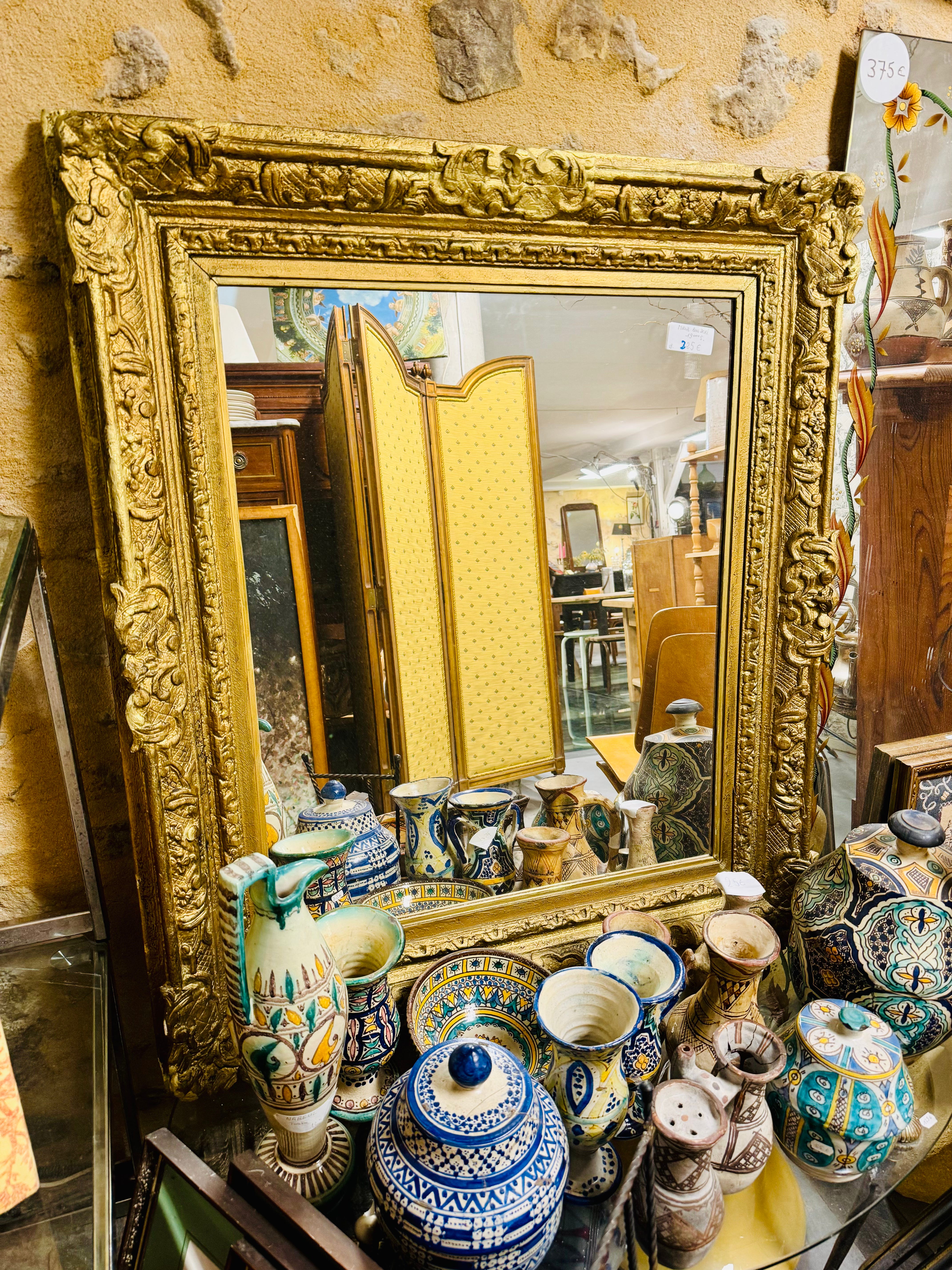
I was having lunch with my Australian friend Alissa at a brocante fête recently — one of those long, unhurried meals in between hunting for treasures that would have felt indulgent to my former self. We got to talking about how Americans (and Australians) travel. The list. The early mornings. The triumphant Instagram post in front of the Eiffel Tower before 9 am. I used to do it too. I’m not judging.
But here’s the thing about visiting someone in the French countryside: you’re not going to check many of the typical boxes. Beyond the cities, France moves differently. And if you let it, it will be the best trip you’ve ever taken — precisely because you weren’t trying to optimize it.
Our friends Sue and Jim arrived and said, simply: “We just want to see your everyday lives.” So we went to the market. We drove through the countryside to a brocante fête in the charming town of Eymet, where Sue found a treasure of a sewing machine for her quilt-making hobby. We made dinner. We sat outside. It was genuinely one of the loveliest visits we’ve had — because they were curious about the life, not just the highlights. If you can bring that energy, even some of the time, your host will feel it.
So what are some examples? Here are some of my favorite moments:
When my brother helped a neighborhood boy haul a giant catfish out of the river. This monster was over 2m and weighed almost 150 lbs!
Watching the grandkids run around nearby castle ruins
When my parents fell asleep giggling to the sound of us singing Bohemian Rhapsody with friends for Ralph’s birthday party
Drinking just a little too much cheap (yet good) wine at the guinguette across the river and laughing like crazy with friends who hadn’t cut loose in a looong time
Seeing some of my best girlfriends succumb to the magic of a summer evening apéro
Spying on chefs doing prep at a 2-star Michelin restaurant
Witnessing the gasps of guests seeing the views of Saint-Émilion for the first time
Hanging out at home in our pjs, eating cheese from our favorite fromagerie


The Basics of Being in France
A few things worth knowing before you arrive:
Say bonjour. Every interaction starts with a greeting. Walk into a shop, a bakery, a pharmacy — and lead with bonjour. “Bonjour madame” or “bonjour monsieur” if you want to go the extra mile, which I’d recommend. You don’t need perfect French. The effort alone signals that you’re playing by the local rules, and people respond to that warmly. French culture has a deep streak of politesse — a genuine acknowledgment of the people around you — and once you tune into it, you’ll notice it everywhere. You might even miss it when you go home!
Faire la bise. In the Southwest, greetings between friends involve two kisses, starting on the left cheek. Yes, with people you’ve just met. Yes, the men too. Give it a go.
At the market and the fromagerie, let the vendor help you. The fromager knows that cheese. The market vendor knows exactly how ripe those peaches are and when you should eat them, whether that’s tonight or tomorrow. Tell them your plans, and they’ll pick the perfect one. It’s a service, not a formality. And please don’t pick up the cheese yourself — we still cringe from second-hand embarrassment over a fromagerie incident where my brother-in-law heisted a hunk of bleu from the cold case!
Lunch is not optional, and neither is the schedule. Restaurants serve lunch from noon until around 2 pm, and dinner from 7 pm until around 9 pm. In between, many kitchens close. Larger cities may have restaurants with service continu which are open all day, but in smaller towns, if you show up hungry at 4 pm, you are largely on your own. Know this, make a reservation, and you’ll never have a hangry afternoon in France.
Be adventurous, food-wise. French cuisine is one of life’s great pleasures. And the set formule — two or three courses, wine, bread, coffee — is a deal that, quite frankly, is unbeatable. We’ve had some of our best meals at lunch, boldly trying whatever is presented to us. It is almost always delicious, even if it’s not something you might have picked off a larger menu. Sometimes, it’s better not to know what’s on the plate in front of you. Lean into it, and maybe you’ll have a funny story like this one:
Ralph and I were out with our friends Peggy and Bob when noix de joue de cochon appeared on the menu of the day. We knew it was pork. And maybe nuts? But beyond that, things got murky. The dish arrived — rich, tender, with a certain roundness that nobody at the table wanted to comment on out loud. We ate every bite. Delicious. But what was it?
There was no cell service in the restaurant. No way to ask Google Translate what we’d just eaten. So the moment we hit the parking lot, Ralph was on his phone.
It was pork cheeks.
The relief was immediate, unanimous, and entirely out of proportion to the situation. The lesson: order things you can’t fully translate. You will probably love them!


Getting Around
If you’re planning to rent a car — and we’d strongly encourage it — driving in France is genuinely manageable, but there are a few rules that will surprise you. No right turn on red. Priorité à droite — meaning cars entering from the right may have the right of way, even on roads where that feels counterintuitive. And be aware of zones de controle where your average speed is measured over a distance rather than a single point — they’re easy to miss. I haven’t found a single guide that covers everything, so here’s one that decodes basic signage, and another that covers other elements, like what to do in case of an accident. Hmm…maybe that’s a future blog post just begging to be written?
P.S. If you need some comic relief, here’s my story about getting my French driver’s license.
And as fun as they are to drive, the country lanes can be a bit of an adventure. French drivers move fast on winding roads that are, by American standards, extremely narrow. You will hug the edge. They will hug the edge. Everyone will manage, because practically everyone is driving what I like to call an Easter egg on wheels. Just go with it. But a word of caution — manual cars are typically the default, so if you’d prefer an automatic, make sure you’ve booked one.
For trains, the SNCF Connect app is your best friend, France-wide — book tickets, check schedules, and manage everything from your phone. The user interface is honestly quite good! More importantly, it saves you from the platform machine situation: the kiosks can be finicky when switched to English, don’t always love American credit cards, and if there’s a queue and ten minutes until departure, it gets stressful fast. Download the app before you leave home. One practical note: on the tram or bus, you’ll likely need a separate app. In Bordeaux, we use the TBM app for trams, buses, and more. You validate your ticket by holding your phone up to the reader or stamping a physical ticket. On trains, a conductor will come around to check — just have yours ready.
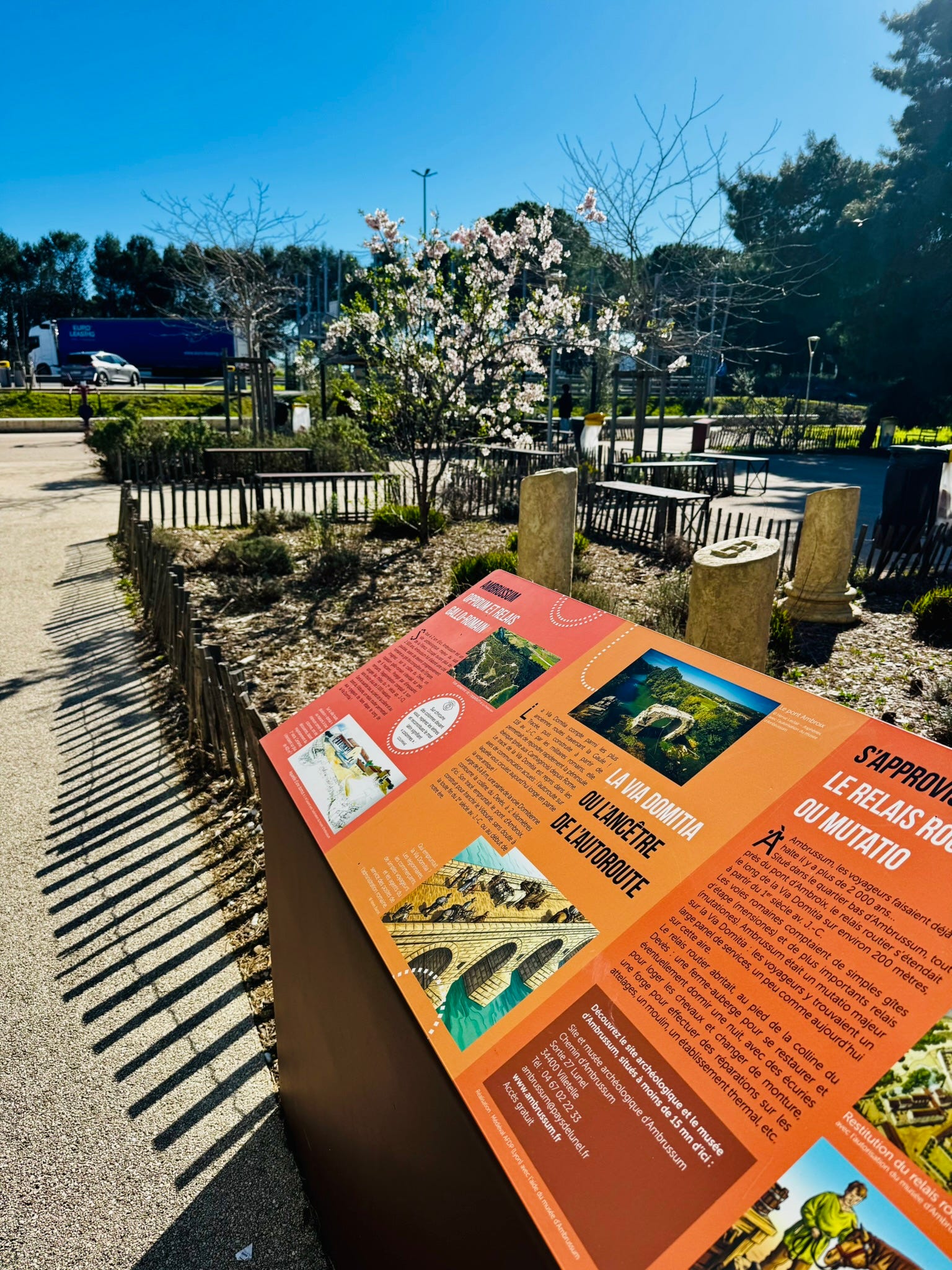
A rest stop note for those driving longer distances: at French highway rest stops, the toilets are free, but toilet seats are a rarity. This is not a rumor. Come prepared, grab your toilet paper before you commit to your squat, and consider it part of the adventure. And good news – at the bigger stations, the food options are typically surprisingly tasty! Fresh salads, sit-down lunches, and of course, coffee. Fortunately for us, there are usually copious electric car charging stations, too.
Money Matters
Skip the currency exchange at the airport and don’t bother ordering euros from your American bank before you leave. Find an ATM once you arrive (ideally one attached to a bank) and withdraw euros there. Not an ATM at the airport or a standalone one. One thing to watch for: the ATM will often offer to convert the transaction at its exchange rate, with a fee attached. It will feel like you have to say yes to get money. You don’t. Decline, and you’ll get your own bank’s conversion rate, which is almost always better. The same principle applies when paying by card — if you’re offered the choice between dollars or euros, always choose euros.
Cards are widely accepted almost everywhere, and contactless payments via phone or watch tend to work smoothly. One small note: for purchases over €50, I’ve found that you’ll generally need to insert your card rather than tap it.
Cash is still worth having, particularly at markets and brocantes where many vendors don’t take cards. Come with some in your pocket if you’re planning a day at a flea market or summer festival.
On tipping: it’s not really a thing here in the French countryside, the way it is in the US or even Paris. There’s no line on the receipt. A small round-up is appreciated — but it’s a gesture, not an expectation. Don’t stress about it.
Health and Emergencies
Numbers to know before you arrive:
15 — SAMU, the medical emergency line
17 — Police
18 — Fire
112 — Universal EU emergency number, works from any phone
Hopefully you’ll never need them.
If you need a doctor, don’t panic. Doctolib is the platform many French doctors use for appointments — you can filter by English-speaking providers, book online, and be seen quickly. A standard visit runs around €30 out of pocket. Ask for a facture and your travel insurance may reimburse you. Any prescription can be filled at a local pharmacy, just take the paper ordonnance to the nearest one.
Before you reach for Doctolib, consider the pharmacy first. The green cross outside means you’re in the right place. Walk in, take a number if needed, wait your turn, and tell the pharmacist what’s going on. You can use Google Translate to explain what ails you, as I’ve found most to be patient and friendly. The pharmacists are trained to treat minor ailments and will recommend something — often plant-based, often surprisingly effective. Go in with an open mind.
As for the fear of a catastrophic medical bill — let us put that to rest. Ralph had a toothache right before we were due to fly back to the US. He used Doctolib to find an English-speaking dentist, got seen quickly, received treatment and several prescriptions, and the entire bill — including a follow-up visit — came to €47. Out of pocket. No insurance. He canceled his $200 a month dental plan two days later.
We always recommend travel insurance, and you should have it. But if you need medical care while you’re here, don’t let fear of the cost stop you. This is not how medicine works in France.
Things People Ask About (or Occasionally Complain About)
Consider this a preemptive FAQ.
The AC situation. Many homes in France — particularly older stone houses like ours — don’t have air conditioning. We do, as it happens, but don’t assume your host does. More to the point: many French people consider AC wasteful, environmentally irresponsible, and frankly a bit unnecessary. If you find yourself complaining about the heat to a French person, be prepared for a response that is equal parts polite and unmoved. The shutters are closed for a reason — old stone houses are remarkably good at staying cool if you manage them properly. Open the windows at night, close the shutters during the day, hydrate, and relax into the afternoon slowdown like everyone else. It’s not a bug. It’s the original climate control.
Restaurant service. This one surprises many Americans. Your server is not going to hover. They’re not going to check in every five minutes, ask if you’re still working on that, or slide the check onto the table before you’ve finished your coffee. In France, the table is yours for the duration of the service. The expectation is that you will eat, linger, talk, and enjoy yourself — and that it would be genuinely rude to interrupt that. When you’re ready to pay, catch their eye, or in many smaller restaurants, simply head to the counter. It’s a different rhythm, and once you adjust to it, you will wonder why you ever wanted to be rushed.
Dietary restrictions. France doesn’t share America’s enthusiasm for dietary customization, and outside of genuine medical allergies — which are clearly labeled on most menus — you may find less flexibility than you’re used to. That said, one pleasant surprise awaits many visitors who avoid gluten or dairy at home: European versions are often easier to tolerate. The proteins in French flour and milk are different, and more than a few self-described gluten-intolerant guests have happily eaten their way through a baguette or two without incident. Worth approaching with an open mind before you rule anything out.
The WiFi. Stone walls that have stood for three hundred years are magnificent. They are also, it turns out, not ideal for WiFi signals. You may find that connectivity in older homes is spottier than you’re used to — not because the internet isn’t there, but because the walls are formidable. Zoom meetings are generally fine, but you might need to find your sweet spot in the house. Consider it an excuse to put your phone down more than usual.
The queue as a social event. Errands may take longer than you’d expect, but that happens when you’re part of a French community! Be patient. The person ahead of you at the bakery is not just buying bread — they’re having a conversation. The pharmacist will ask follow-up questions. The butcher will have opinions about how you should cook what you’re buying. Your instinct might be to get in, state your business, and get out. Resist it. This is how things work here, and it’s actually lovely once you lean into it.
Come On Over
Here’s what often gets overlooked about visiting a friend who has moved abroad: you’re not just coming to see a place. You’re coming to see a life. A real one — with all its rhythms and rituals and unexpected weekday apéros with people whose names you’ll mispronounce and whose stories you’ll retell for years.
We will sweep you into ours. That’s the deal. There will be markets and châteaux and long lunches and souvenir shopping, but there will also be ordinary moments that turn out to be the ones you remember most. A morning coffee on the terrace. A brocante find you didn’t know you needed. A conversation that meanders for two hours because nobody is in a hurry to be anywhere else.
We moved here not entirely sure what we were looking for. What we found — the pace, the beauty, the particular way life slows down and opens up at the same time — has been, honestly, a balm. For both of us. And sharing it with the people we love most is part of what makes it feel real.
So come. Read this guide, break in your shoes, download the SNCF app, and bring the bourbon. France beckons, and we cannot wait to see you!
À bientôt,
Valérie
P.S. New here? I’ve got you. Head to my Start Here page for a full collection of posts organized by theme — so you can dive straight into whatever part of this adventure speaks to you most.
Know someone who would enjoy this one? Please share with reckless abandon!
Thank you so much, we are just buying a house in France and this will be so useful for our guests. I really appreciate you doing this.
Excellent guide ! And indeed a good one to share. We have more visitors than usual this spring, some arriving on cruise ships that stop for a day in nearby Villefranche, so helping them figure out what to do with 12 hours or so of "shore leave" has been part of our routine ... or travelling to meet them there (or in Toulon) just to socialise.
One thing though: people tend to travel and want to visit at times of year when the weather is ideal--and those are the times of year when we like to get away as well. It can be a little awkward hearing from someone in December that they might visit "in April or May" and "Will you be around?" That's the time of year we like to travel, too, but we don't typically plan that far ahead !
As for cars, the priorité à droite is indeed the thing that I have to consciously pay attention to in urban driving, especially when there are no lights or stop signs; something to pay attention to on bicycles, too. I'd also say if you plan an urban holiday, think about parking! Spaces can be elusive and you might come to detest the pay-to-park machines, but you'll be sure to improve your parallel parking skills ;)